Pledgr
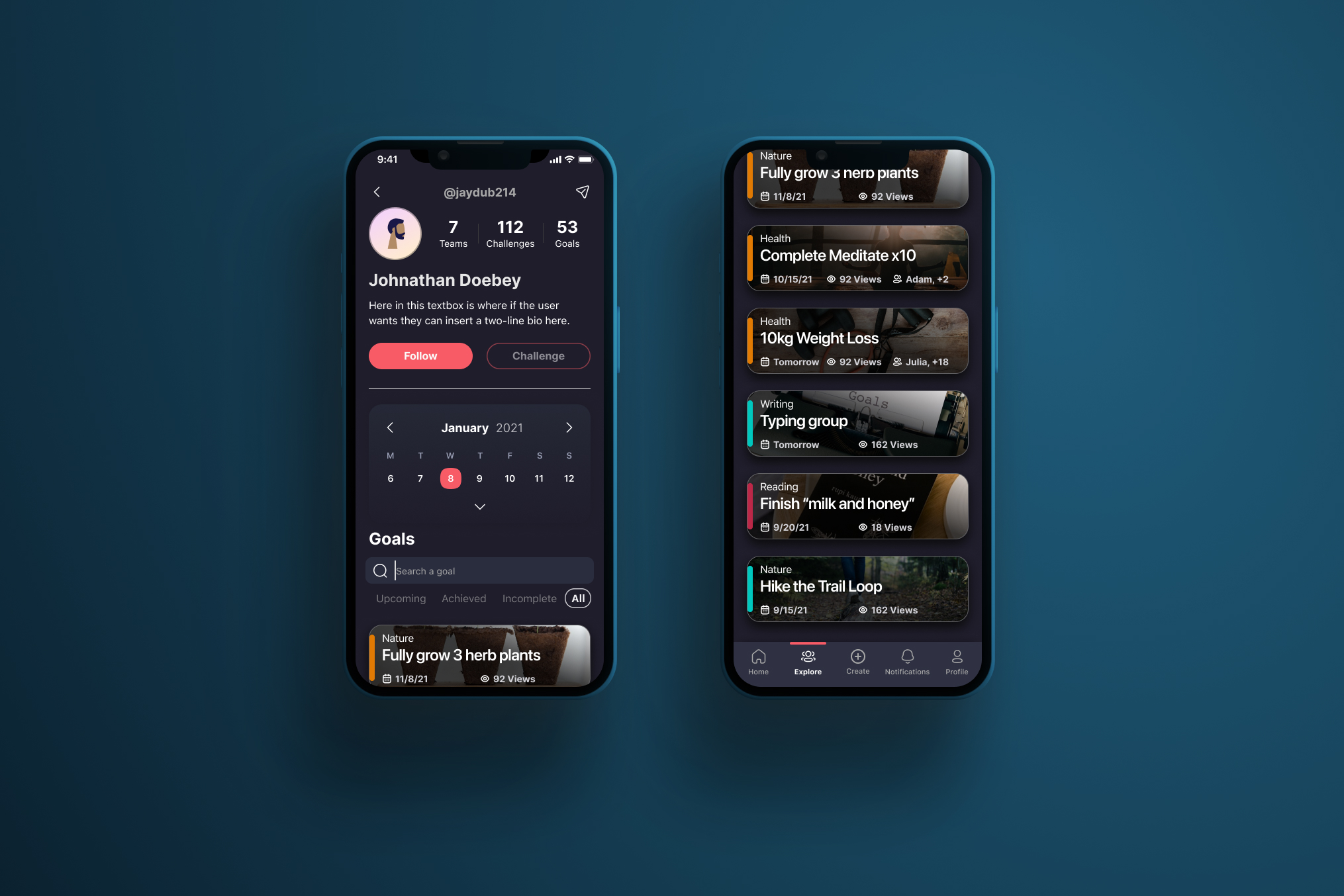
A mobile app for building better habits, designed by a team assembled across four countries. I owned profile and accounts in a pod of three, and the work shipped into development and testing.
The engagement
Pledgr is an app for goal-setting and habit building. I came in as a contract product designer through my former mentor Will Ntim, a senior designer whose background includes PayPal, Visa, and Home Depot, who assembled a team of designers from Canada, India, the UK, and the US to work the project like a real product team.
I worked in a pod of three on profile and accounts, running agile sprints with product and engineering, and taking part in sprint rituals and critique across the full ten-designer group.
What came out of it
A fully prototyped version with a new UI and design system that was developed and reached testing. I stayed in touch through the development timeline and made smaller edits as it progressed.
What I would tell you in an interview
The interesting constraint was organisational rather than visual. Ten designers across four timezones, building a design system at the same time as the screens that depend on it, is a coordination problem first. Working in a pod of three inside that meant most of the real work was making sure our corner stayed consistent with nine other people’s decisions — asynchronously, with no overlapping hours for half the team.
It is the smaller version of the problem I hit again on Saddle Pass, where one design system had to survive three codebases. The answer was the same both times: decide the shared vocabulary early and write it down, because you cannot correct drift in a conversation that never happens.