Coastal Cowgirl
A house is not a room you decorate. It is a product with a user, a conversion funnel, and a retention problem — and the person who designed it is also the person on the hook when the dishwasher fails at 11pm.
Designing a house as a product
I design interiors as Stagecoach Design Co., a studio of Carrington Design Co. Coastal Cowgirl is the project I own outright, which makes it the one where I find out whether my decisions were right — I am the designer, the host, and the person paying the mortgage.
The framing I use is deliberately a product one, because the incentives line up that way:
- The guest is the user, arriving with no onboarding and nobody to ask.
- The listing is the funnel. Photographs are the landing page; the nightly rate is pricing.
- The review is retention. A guest who had a bad night writes it down in public, forever.
- Turnover is operating cost, and every material choice either adds to it or does not.
That last one is the constraint most interior design never has to answer to. A beautiful textile that cannot survive a wash cycle is not a good design decision here. It is a recurring expense with a photo attached.
What it was
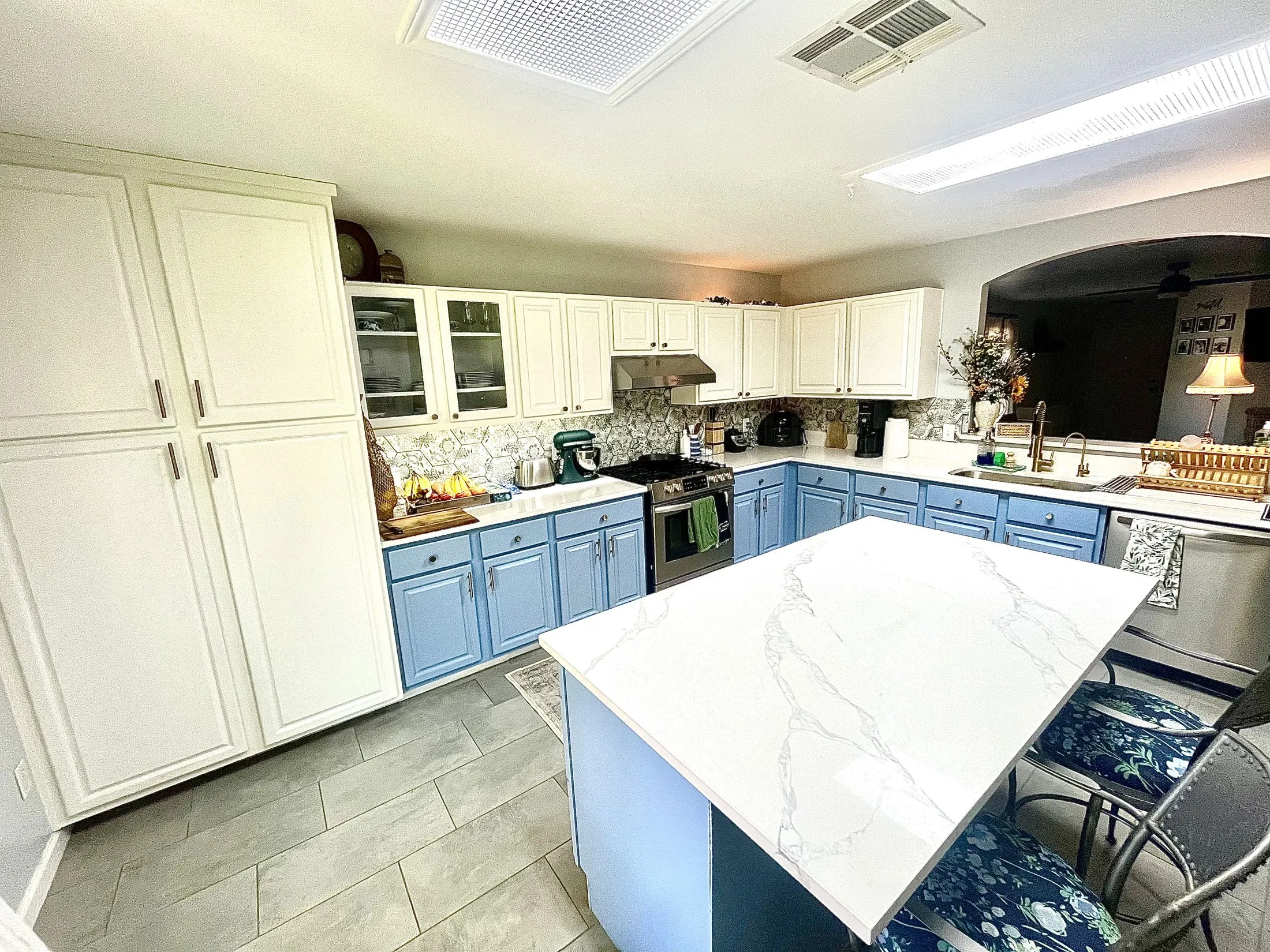
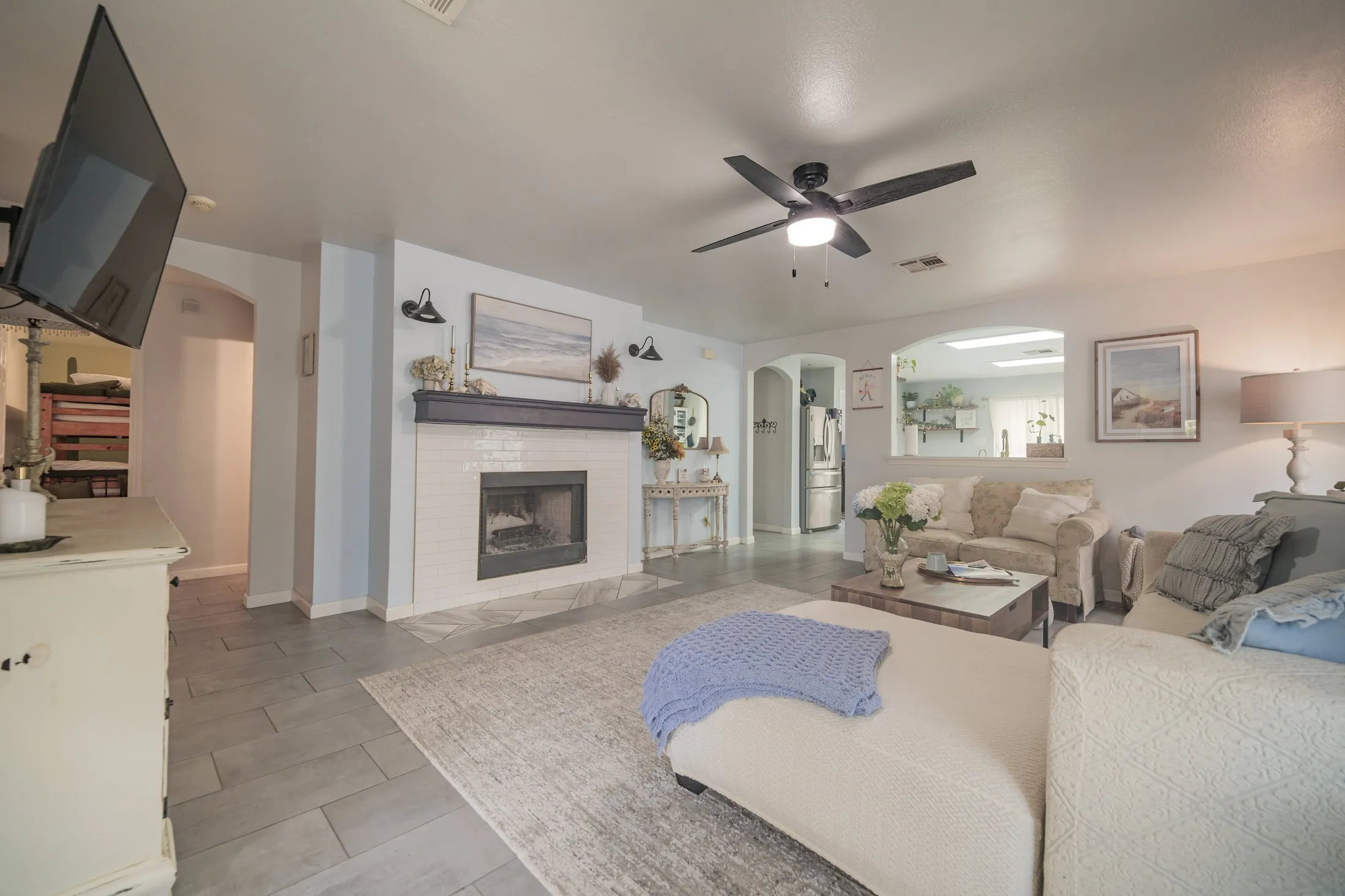
The house read as somebody’s home, which is exactly the problem. Blue lower cabinets against cream uppers, a busy hexagonal backsplash, personal objects on every surface. None of it is bad — it was simply specific to the person who lived there, and a rental has to be legible to a stranger within about four seconds of a photograph loading.
The brand was a positioning decision
Coastal Cowgirl is not a decorating theme. Central Texas short-term rentals are overwhelmingly one of two things: modern farmhouse, or beige. Competing inside either category means competing on price.
A coastal palette three hours from the coast is strange enough to be remembered and warm enough not to alienate anyone — and the cowgirl half keeps it honest about where it actually is. The name gave every later decision a test to pass: pale blues, white oak, natural textures, and the Texas elements left in rather than designed out.
The bunk room is a revenue decision
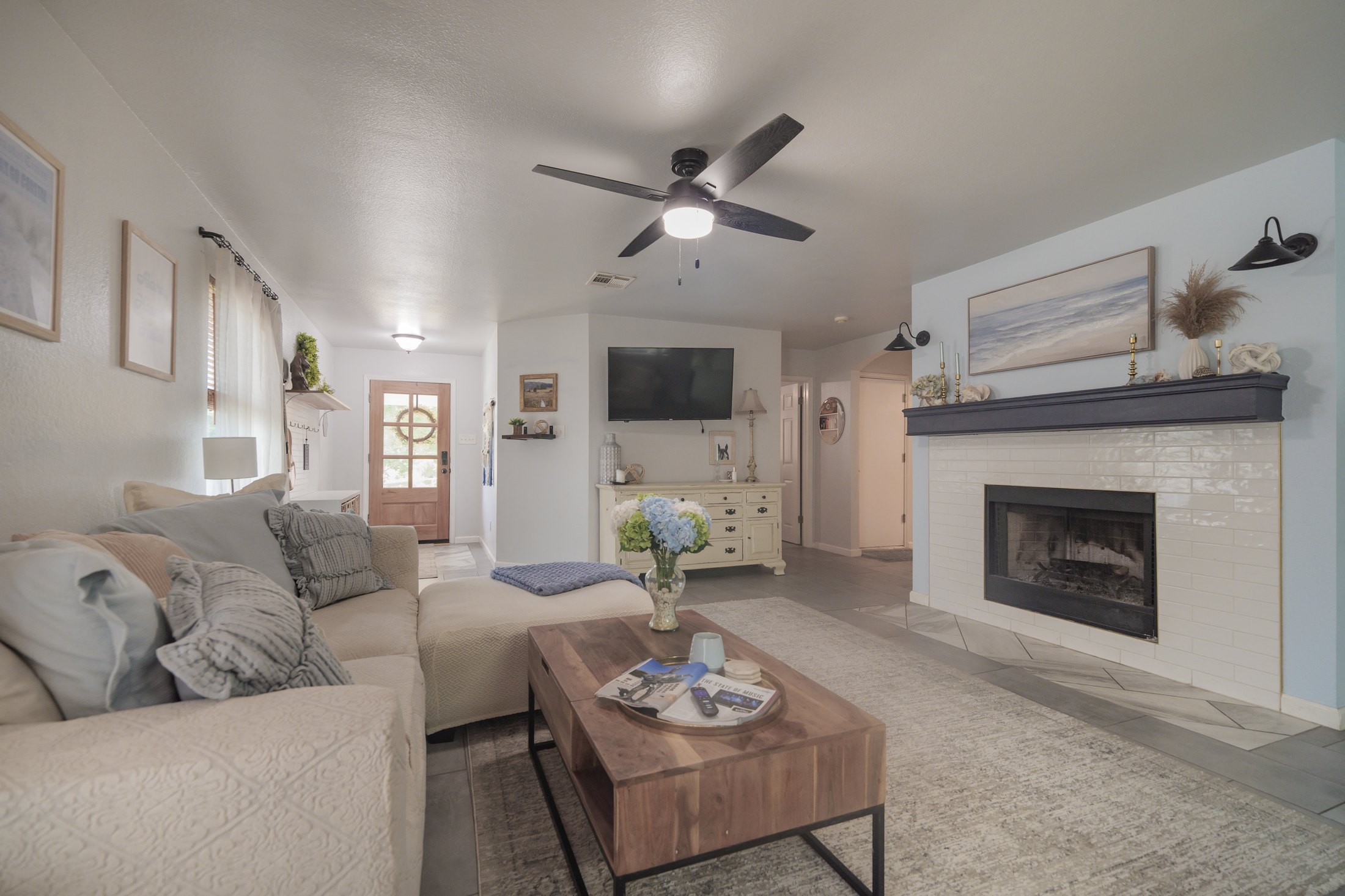
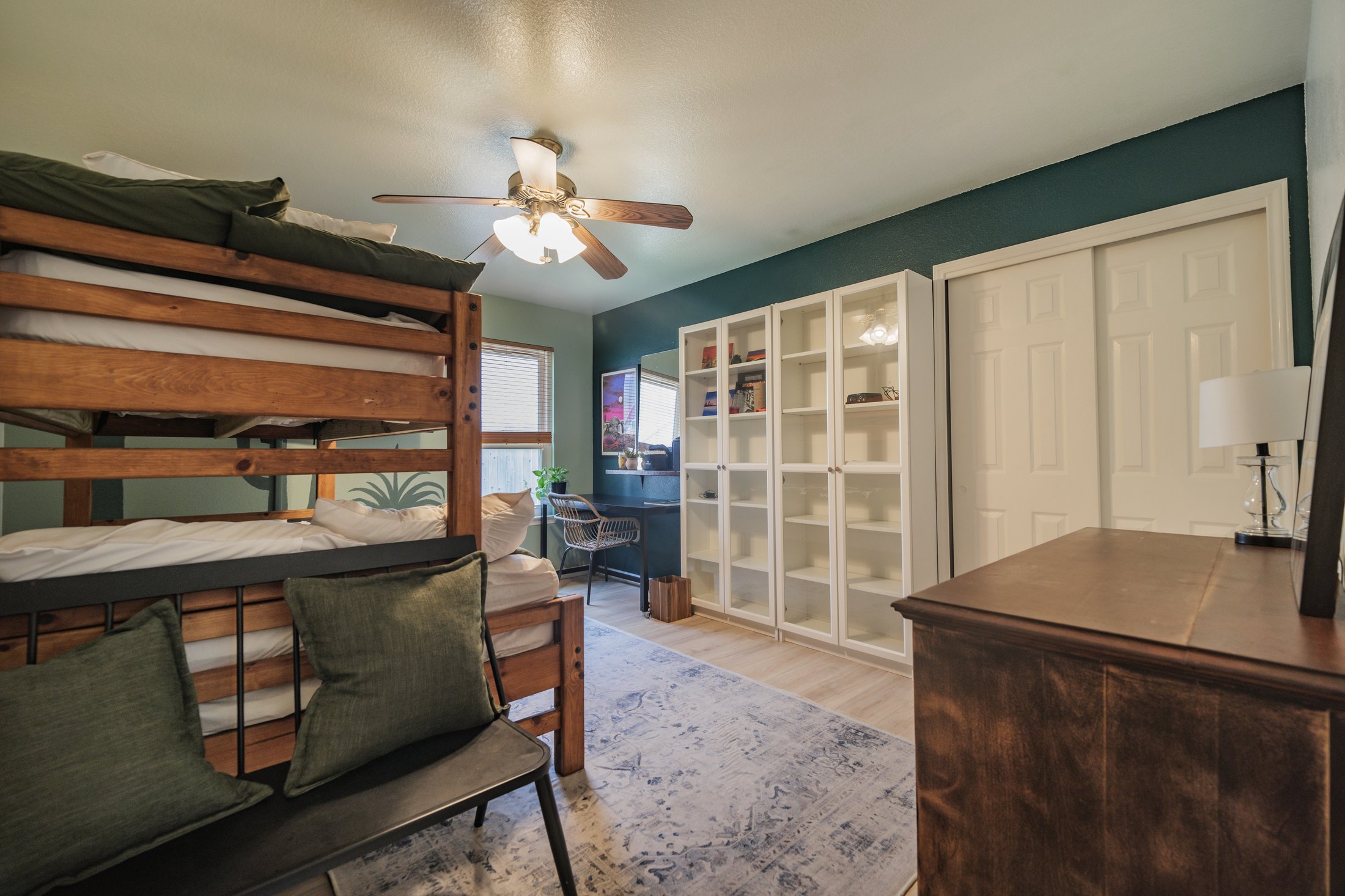
The most commercially consequential room is the one that looks least designed.
Operations are part of the design
A rental is not finished when the photographs are taken. It has to run.
I wrote the house manual, the turnover checklist, and the cleaning SOP, because a design that only works when the designer is present is not a system. The checklist exists so a cleaner who has never met me resets the house to the same state every time — which is what a guest is actually paying for when they book somewhere that looks like the photographs.
Then I automated the parts that were eating my evenings. I built a Python operations service that handles dynamic pricing, turnover scheduling, vacancy response, and a weekly report, running on a schedule without me. That is the same instinct as putting design tokens in a repository with tests: a standard nobody enforces is a preference.
The decision I got wrong first
I signed a property manager onto a 25% revenue share, and then ran the margin analysis properly rather than optimistically. At the volume this house does, 25% of revenue was larger than the problem it was solving — most of which I had already automated.
The second decision was to move the property from nightly short-term to mid-term stays of thirty nights or more. Fewer turnovers, lower cleaning cost, steadier occupancy, and a guest who treats the place like a home rather than a party venue. It is a worse story and a better business.
What I would tell you in an interview
This is the project I point to when someone asks whether I understand the business side, because there is nowhere to hide in it. I chose the palette, wrote the listing, priced the nights, paid the cleaners, read the reviews, and ate the mistakes. The feedback loop between a design decision and its financial consequence is about thirty days long.
It also made me better at software. Turnover cost taught me more about maintenance burden than any engineering conversation has — when you have personally washed the thing you specified, you specify differently.